Concrete looks simple, but in Jacksonville (and the beach communities nearby) the rules behind a new driveway, patio, or sidewalk can get complicated fast. The good news: if you hire a licensed contractor, the permit side of the job is usually handled for you, and you avoid the headaches that come with unpermitted work.
When a permit is more likely (and why it matters)
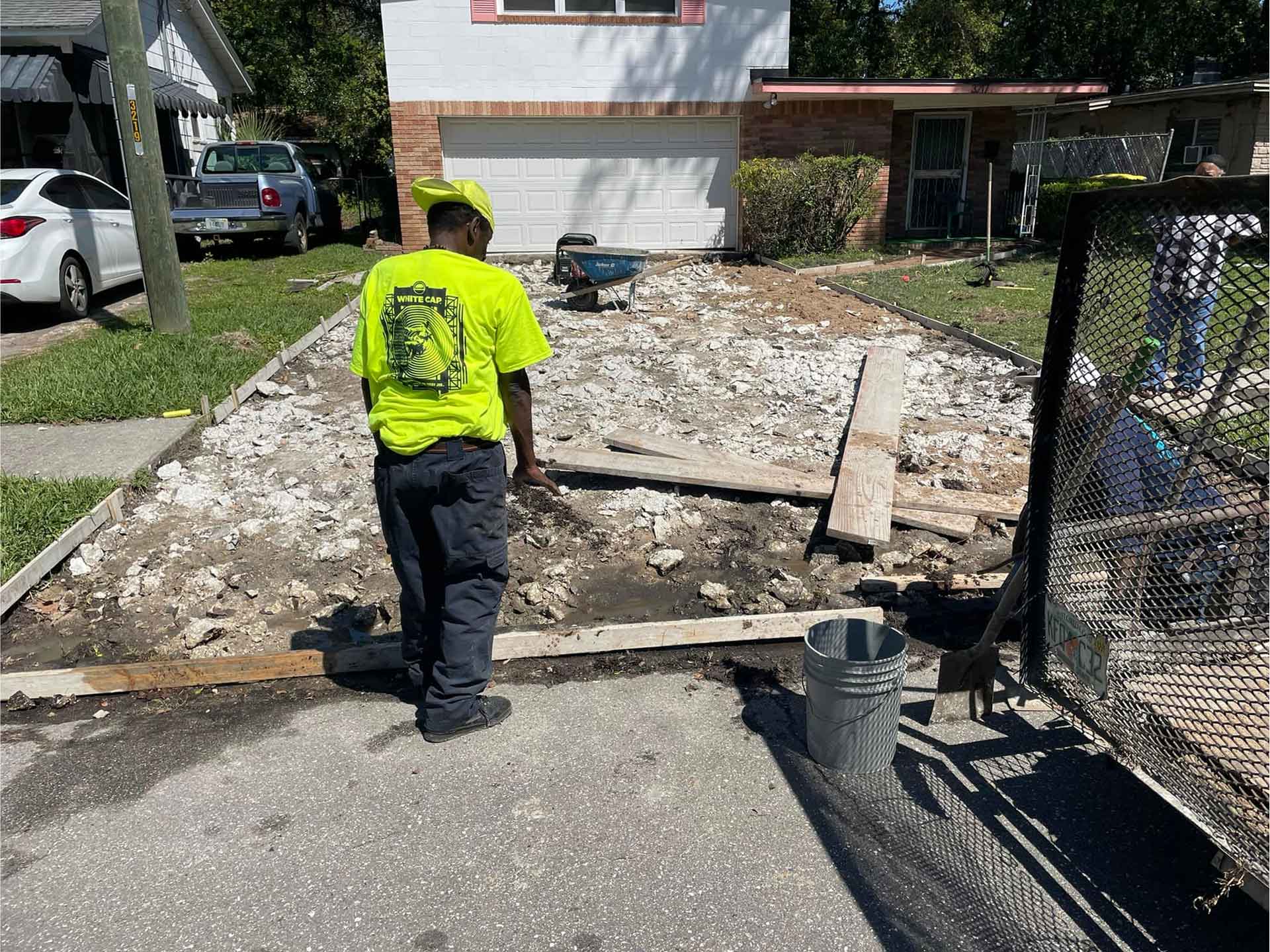
In general, you should expect some level of permitting or review when concrete work changes how water drains, changes access to the street, expands parking surfaces, or impacts easements/right-of-way. That includes many driveway replacements/expansions, new walkways that connect to public sidewalks, and any flatwork that ties into a structure (like a foundation, stem wall, or slab supporting an addition).
Also keep in mind: Jacksonville is not the same as Jacksonville Beach, Neptune Beach, Atlantic Beach, or Ponte Vedra Beach/Palm Valley. Each municipality may have its own forms and review process, even for similar work. For example, Jacksonville Beach uses a “Driveway or Hardscape Permit Application” that specifically lists driveways, walkways, patios, and pool decks.
Right-of-way work: the big “permit surprise” for driveways and sidewalks
The most common surprise is the public right-of-way (ROW). If any part of the project involves the city ROW, such as a driveway apron, work near the curb, or anything that disturbs a public sidewalk area, you may need a Right-of-Way permit. Jacksonville notes that a ROW permit is required to disturb, excavate, obstruct, or place construction materials on or in a city road, right-of-way, or easement (it is sometimes even referred to as a driveway permit).
Other local governments do this too. Atlantic Beach, for instance, flags right-of-way permitting for certain driveway situations (especially commercial).
What homeowners should expect when hiring a licensed concrete contractor
- They confirm jurisdiction and rules: City of Jacksonville vs. beach community requirements, plus HOA or historic district considerations if applicable.
- They handle the permit trail (when needed): Jacksonville uses the JAXEPICS portal for permit applications.
- They coordinate inspections: Jacksonville’s Building Inspection Division provides phone and online options for requesting inspections (and failed inspections can trigger reinspection fees).
- They keep the work code-compliant: Jacksonville’s Building Inspection Division publishes which Florida Building Code edition is being enforced (and other permit FAQs like typical permit validity).
- They protect you with proper documentation: license/insurance verification, written scope, and warranty details (and you should always ask what the warranty covers for your specific job).
Common paperwork you may be asked for
Even when the contractor does the heavy lifting, homeowners are often asked for basics like a property address and a simple site sketch/survey showing where the new concrete will go, especially when setbacks, drainage, or lot coverage could be impacted. If you are acting as an owner-builder in certain areas, you may see separate owner-builder requirements on the application.
The simple takeaway
If your concrete project touches the street side of the property, changes drainage, or connects to public sidewalks/approaches, assume permits may be involved. The safest move is to hire a licensed, insured concrete contractor who knows the local process and pulls permits when required, so you do not get stuck with stop-work orders, resale issues, or rework.
If you are in Jacksonville, Atlantic Beach, Neptune Beach, Jacksonville Beach, Ponte Vedra Beach, or Palm Valley and you are considering a driveway, patio, or sidewalk project, Ernest Concrete can walk you through what to expect before any concrete gets poured.