Choosing the right concrete finish is one of the biggest decisions you’ll make for a new driveway, patio, or walkway. The finish affects more than just looks—it can change traction, heat feel underfoot, how well it hides stains, and how easy it is to maintain. In Northeast Florida, the sun, humidity, sudden downpours, and sandy grit all play a role in which finishes hold up best.
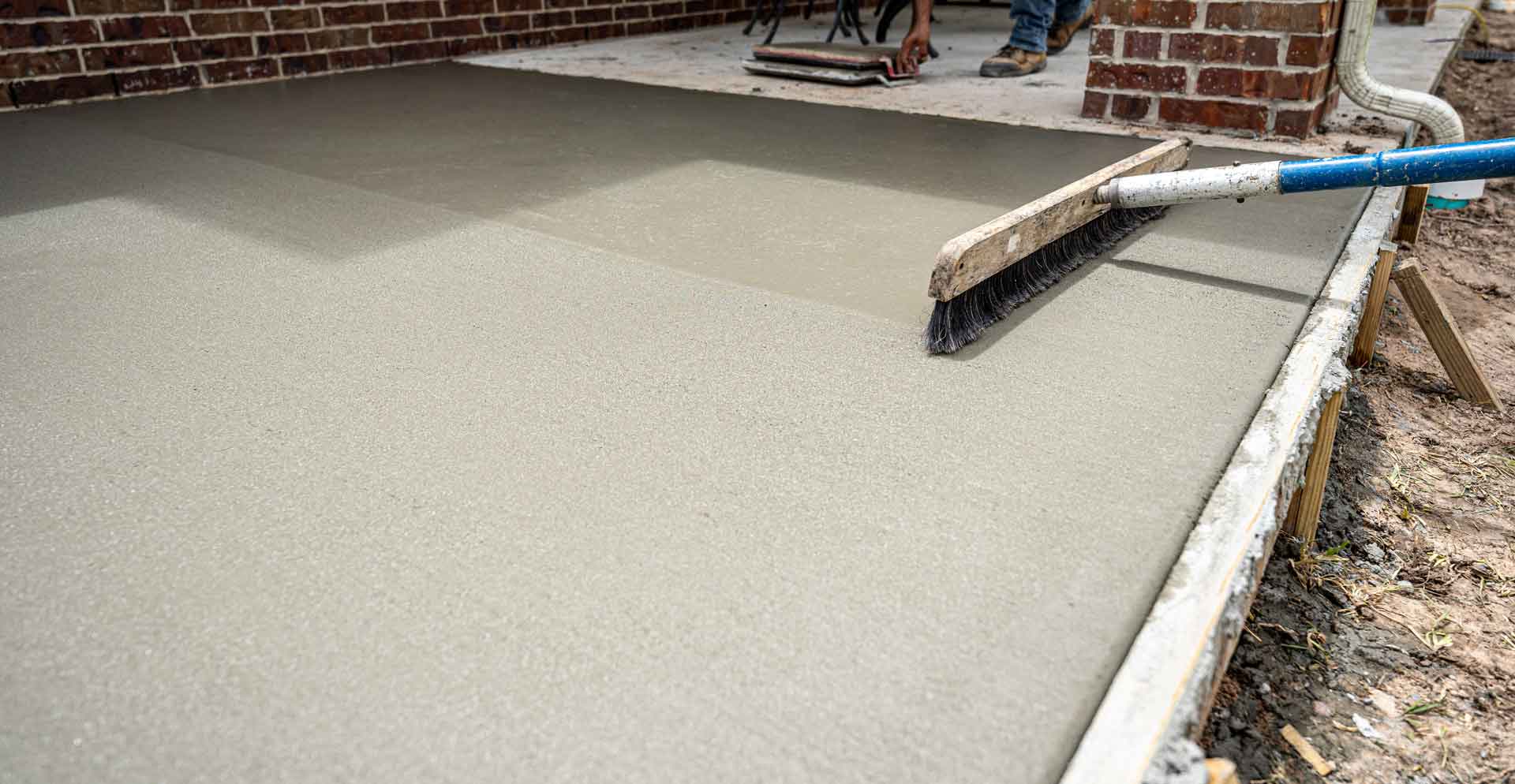
1) Broom Finish: The Florida-Friendly, Slip-Resistant Standard
A broom finish is created by dragging a specialty broom across the surface while the concrete is still workable. This leaves fine texture lines that improve traction. It’s one of the most popular choices for driveways and sidewalks because it’s practical, cost-effective, and safer when wet.
Pros: Great slip resistance, durable, budget-friendly, easy to repair and maintain.
Cons: More “utilitarian” appearance, texture can catch dirt if not rinsed occasionally.
2) Trowel (Smooth) Finish: Clean Look, Best for Covered Areas
A smooth trowel finish is worked repeatedly with trowels to create a flatter, more refined surface. It can look sharp and modern—especially on covered patios, lanais, or interior-adjacent slabs. However, in rainy conditions it can be slippery if used in exposed walkways or pool-adjacent areas.
Pros: Sleek appearance, easy to sweep clean, great for covered spaces.
Cons: Can be slick when wet; not ideal for exposed outdoor walking surfaces without added texture.
3) Salt Finish: Subtle Texture That Handles Heat and Hides Wear
A salt finish is created by pressing rock salt into the surface and washing it out after the slab sets. The result is a lightly pitted, textured finish that offers grip without looking overly rough. It’s a strong option for patios and walkways in hot climates because it helps break up glare and can conceal minor marks.
Pros: Attractive, slip-resistant, hides small blemishes, comfortable texture.
Cons: Requires careful timing and technique; not every contractor offers it.
4) Exposed Aggregate: Decorative and Grippy for Patios and Entryways
Exposed aggregate finishes reveal the natural stone within the concrete by washing away a thin surface layer. This creates a high-end look and excellent traction—great for patios, front entries, and walkways. In Florida’s weather, it also tends to mask dust and light staining better than perfectly smooth concrete.
Pros: Decorative, very slip-resistant, hides dirt well, long-lasting.
Cons: Can feel rough on bare feet depending on stone size; costs more than basic finishes.
5) Stamped Concrete: High Style, Needs Smart Sealing in Humidity
Stamped concrete uses patterned mats to mimic stone, brick, tile, or wood. It can dramatically upgrade curb appeal and outdoor living spaces. In Florida, proper sealing matters—humidity, UV exposure, and frequent rain can wear down the protective layer faster, especially in high-traffic areas.
Pros: Premium look, lots of design options, can boost visual value.
Cons: Needs periodic resealing; can be slippery if a high-gloss sealer is used without an additive.
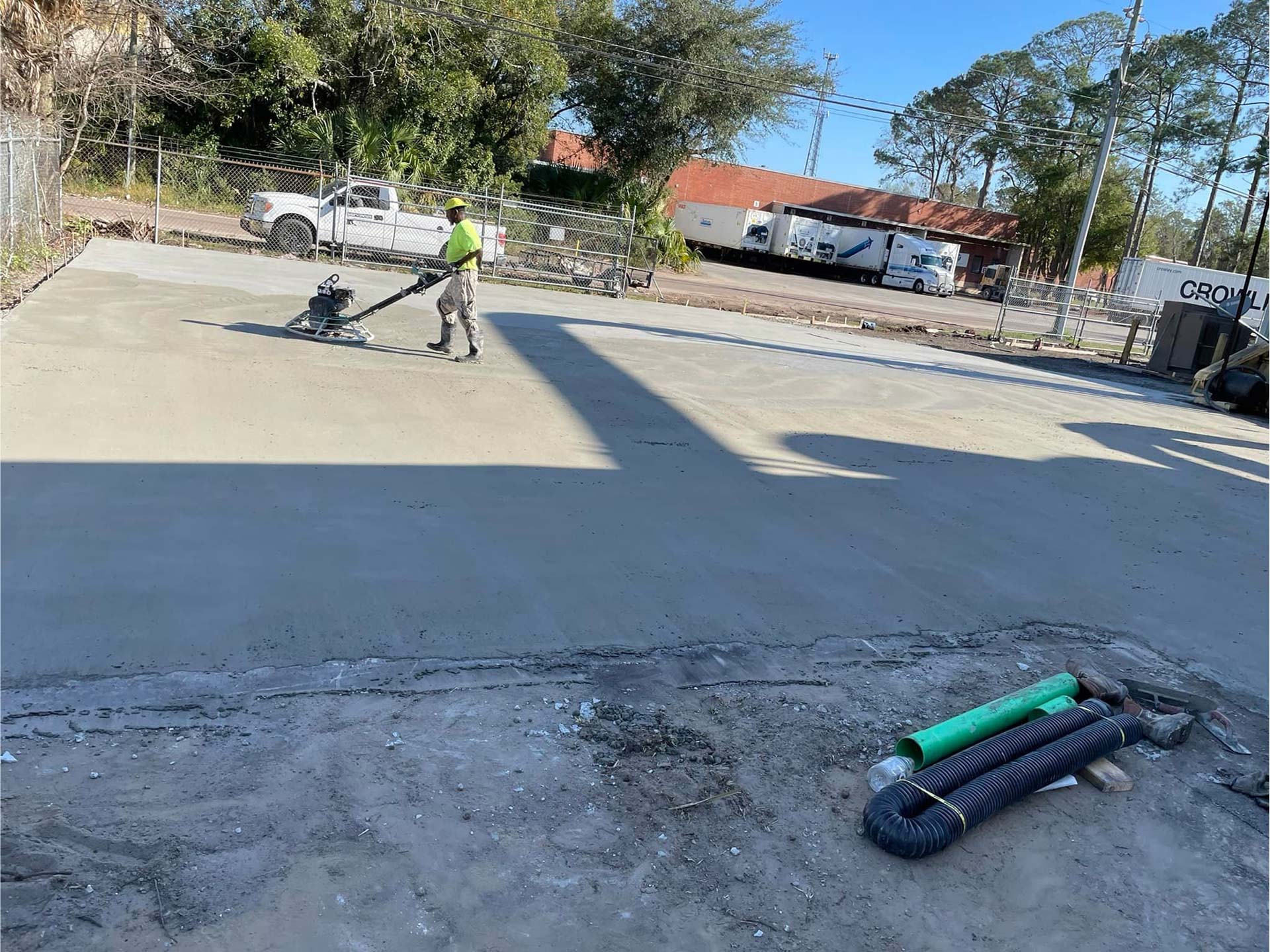
How to Pick the Right Finish for Your Driveway, Patio, or Walkway
For most driveways and sidewalks, a broom finish is the best all-around choice for safety and longevity. For patios, salt finish and exposed aggregate offer a great balance of traction and appearance. If you want a decorative upgrade, stamped concrete can look incredible—just plan for routine sealing and choose slip-resistant options where needed.
If you’re not sure what fits your property, a professional contractor can recommend a finish based on sun exposure, drainage, slope, and how you’ll actually use the space. The goal is simple: a surface that looks right, feels safe, and holds up year after year in Florida weather.